Before the ranking, one honest paragraph. Electric scooters have crossed the point where any good brand is a bad purchase — 3 kWh-class lithium packs, 75+ km real range and standardised charging are table stakes now. What separates a great purchase from a regret in 2026 is narrower: service density in your city, home-charging access, and whether the price band matches the battery you actually get. Use the table below to shortlist two models, then read their individual pages for the detail.
Best Electric Scooters in India 2026 — Price & Range
Most lists just repeat what companies say. This one compares real range, running cost and — the question most lists skip — can you get it serviced where you live?
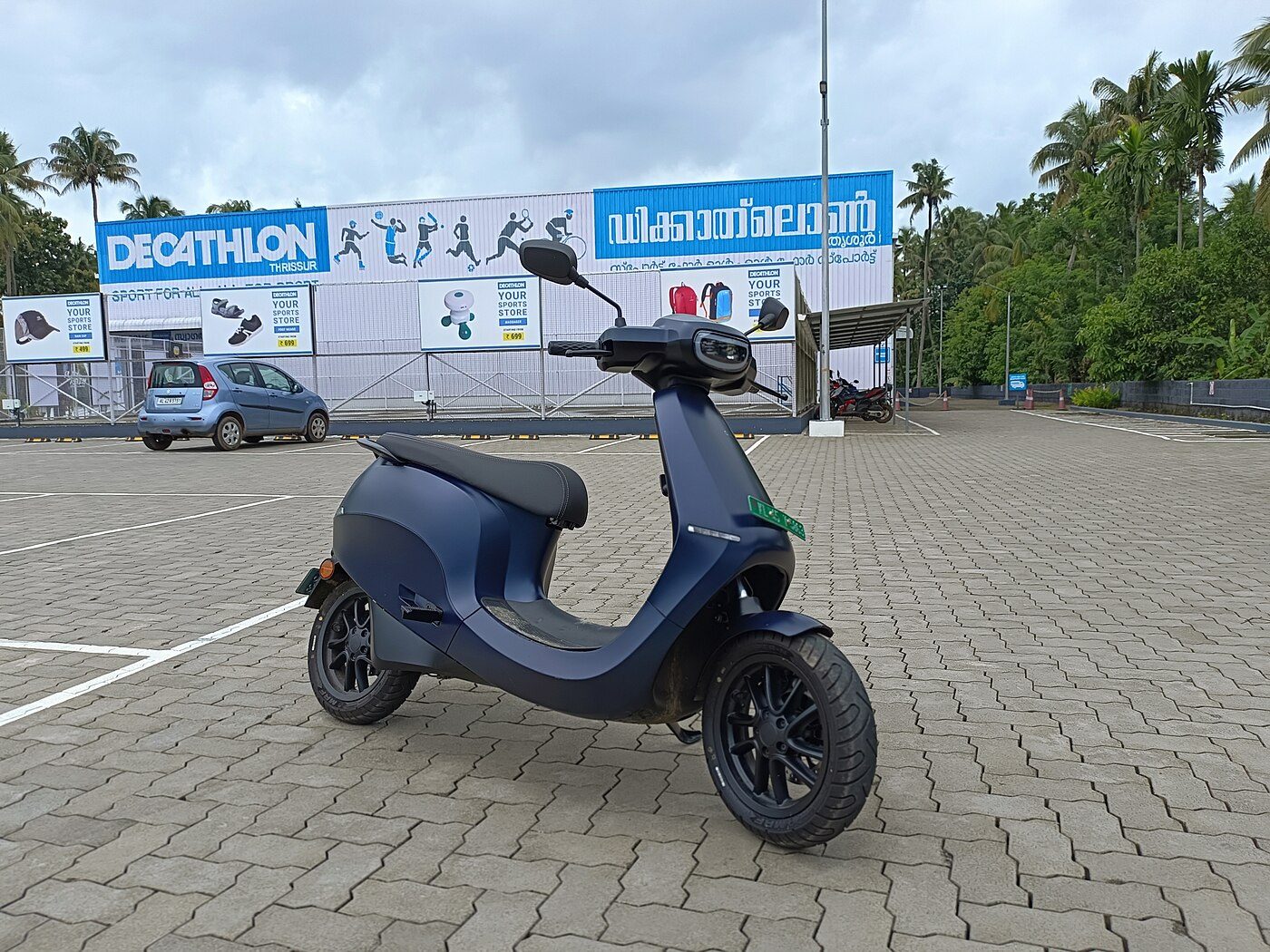 Photo: Wikimedia Commons contributor, CC BY-SA · Image credits
| Model | Battery | Claimed range | Real range* | Top speed | Price band (ex-sh.) |
|---|---|---|---|---|---|
| TVS iQube | 2.2–3.5 kWh | 75–150 km | 55–105 km | 75–78 km/h | ₹95k–1.25L |
| Bajaj Chetak | 2.9–3.2 kWh | 115–127 km | 80–95 km | 63–73 km/h | ₹1.0L–1.35L |
| Ola S1 (X/Pro) | 2–5.3 kWh | 108–248 km | 70–160 km | 90–120 km/h | ₹75k–1.30L |
| Ather 450X | 2.9–3.7 kWh | 119–161 km | 80–110 km | 90 km/h | ₹1.25L–1.45L |
| Ather Rizta | 2.9–3.7 kWh | 123–159 km | 85–110 km | 80 km/h | ₹1.10L–1.45L |
*Real range = our honest conversion for mixed city riding with a solo rider — the same maths our range calculator applies to any scooter. Prices move often; treat bands as planning figures and confirm at the showroom. The PM E-DRIVE incentive knocks up to ₹5,000 off qualifying models.
The short version, honestly
Most people should shortlist the TVS iQube first — not because it is the most exciting machine, but because India's largest scooter service network behind it means the ownership experience rarely depends on one workshop's mood. The Ola S1 is the value play: nobody else gives you 4 kWh for this money, and if you have home charging, the software-forward experience is genuinely ahead — read its page for the service-network caveat. The Bajaj Chetak is the tank: metal body, IP67-sealed battery, and a brand whose dealer network reaches towns other brands ignore. The Ather 450X is the rider's pick — the best handling and the best dashboard in the segment — while the Rizta trades some of that edge for family space and a plusher ride.
Whatever you shortlist, run the numbers before the showroom: the EV vs petrol calculator shows what each model saves monthly, the EMI planner shows what financing really costs, and the subsidy guide shows which benefits your state still pays. If you are deciding between two finalists, our buyer's guide covers the removable-battery and service-network questions that finish most debates.
Frequently asked questions
Which is the No. 1 electric scooter in India right now?
By sales volume, the TVS iQube has held the top spot through 2025–26, with Bajaj Chetak and Ola's S1 range trading places behind it. Sales rank measures dealer network and price reach as much as the product — read the individual pages for which model fits your situation.
Which electric scooter is best under ₹1 lakh?
The Ola S1 X (2–3 kWh) and iQube base variants sit in or just under that band with genuine lithium range. Expect 60–90 km real range and 25–50 km/h cruising comfort — superb second-vehicle territory. Just keep ₹5,000–8,000 aside for accessories and check the model is on the PM E-DRIVE approved list.
Which scooter has the best service network?
TVS and Bajaj, by a wide margin — decades of petrol-scooter dealerships mean coverage in cities where EV-only brands have no presence. Ather and Ola are expanding fast but remain metro-weighted; check your city before booking, not after.
Do these scooters qualify for the government subsidy?
Most 2–3.5 kWh models fall under the PM E-DRIVE cap and take up to ₹5,000 off the invoice automatically — but scooters above the ex-factory price ceiling pass on nothing, so confirm before booking. Our subsidy process guide walks the exact checks.