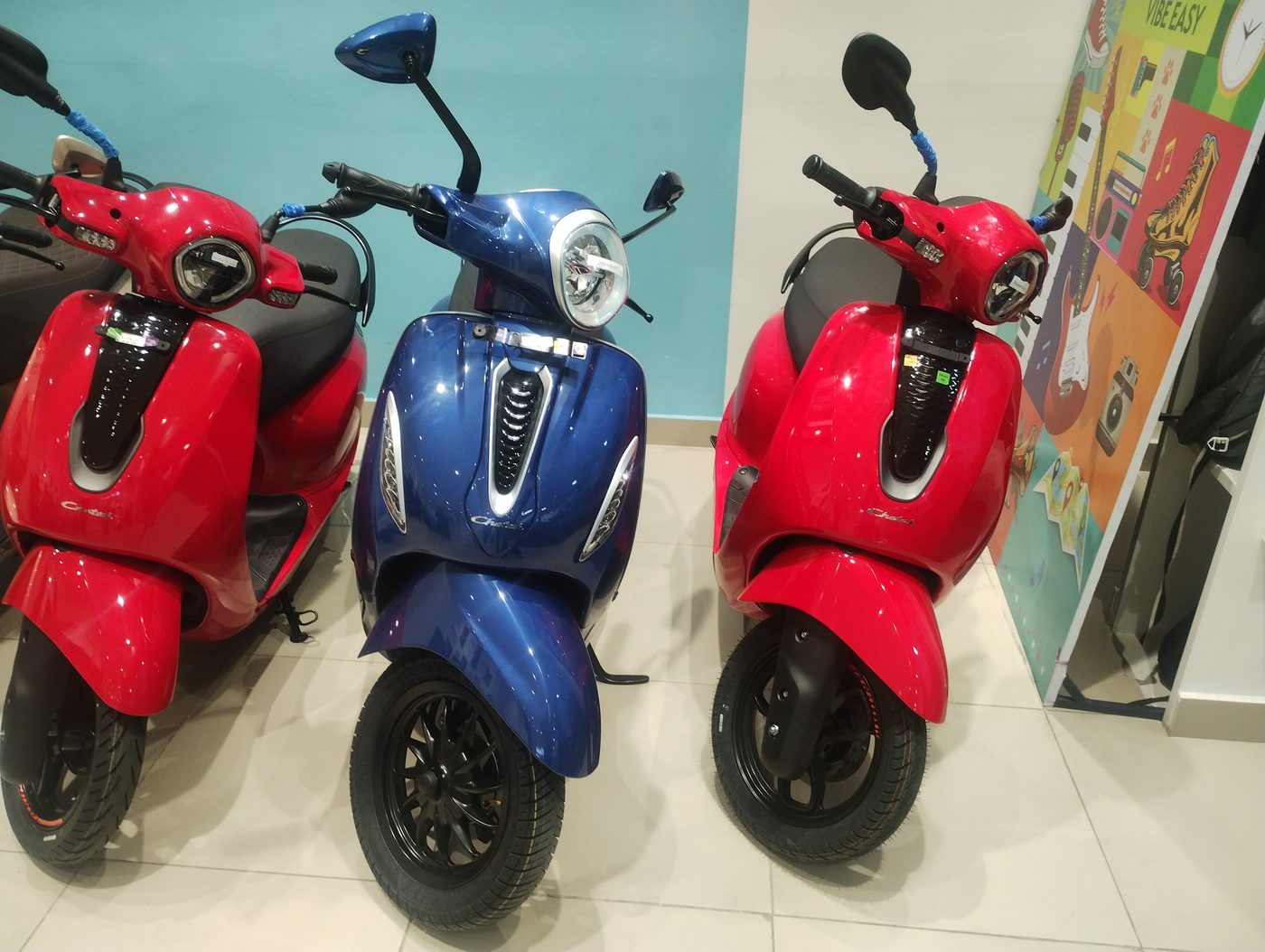
Bajaj Chetak Price in India, Range & Mileage (2026)

The name carries fifty years of trust and the product carries the segment's best build story: sheet-metal body, IP67-sealed battery, and a dealer network that reaches where EV startups don't.

Bajaj Chetak electric scooter 2026Photo: Wikimedia Commons contributor, CC BY-SA 4.0 · Image credits
At a glanceSpecThe honest note
Battery2.9 / 3.2 kWh lithium (IP67)Flood-rated sealing — rare at this price
Claimed range115–127 kmTest-cycle figure, not a promise
Real range80–95 kmSolo rider, mixed city — check your habits in the range calculator
Top speed63–73 km/hVariant-dependent; a deliberate city machine
ChargingOnboard charger, home socket0–100% overnight; no fast-charge ecosystem
Price band₹1.0L–1.35LPremium over rivals buys metal and sealing
WarrantyBattery up to 5 yr / 70,000 kmTerms by variant — see the warranty explainer

The IP67 battery is the real headline

Most electric scooters are rated IP65–66 against water; the Chetak's pack is sealed to IP67 — submersible-grade. In a country where one flooded underpass totals EVs by the dozen each monsoon, this is not a spec-sheet ornament. It is the difference between riding through a heavy Delhi rain with confidence and reading our monsoon care guide with anxiety. Combined with metal body panels that survive daily abuse better than plastic, the Chetak is the scooter you buy for the decade, not the season.

Running costs, with real numbers

Home charging at ₹8/unit and ~30 Wh/km puts every 100 km at roughly ₹24 — a 900 km month costs about ₹220 in electricity. Bajaj's service network prices work at petrol-scooter rates, and the powertrain needs little: budget tyres and brakes, not engine oil. Against a petrol scooter the monthly saving typically runs ₹1,800–2,200 — put your own distance into the calculator and see the split. The subsidy guide covers the central incentive and your state's road-tax waiver.

Where it falls short — honestly

The Chetak is deliberately conservative. Top speed sits at 63–73 km/h by variant — the slowest of the big names, fine for city, frustrating for ring roads. Battery size tops out at 3.2 kWh while rivals stretch past 4, so long-range riders get less headroom. Weight: the metal body makes it one of the heaviest in class, which you feel in tight parking. And tech: the infotainment is competent, not cutting-edge — Ather's dash is a generation ahead.

Who should buy it

Buy the Chetak if: monsoon flooding is a real concern in your city, you keep vehicles for a decade, or you live in a town where Bajaj service is the only trusted name. Look elsewhere if: you want maximum range per rupee or the fastest-charging package — read the 2026 comparison before deciding.

Frequently asked questions

What is the real range of the Bajaj Chetak?

80–95 km for the 3.2 kWh pack in mixed city riding; a daily pillion or heavy throttle pulls it toward 70. The claimed 115–127 km is test-cycle territory. Verify with the range calculator.

Can the Chetak handle waterlogging?

Better than anything else in the segment — the IP67-rated battery and sealed electronics are built for it. But no scooter should wade through water above the floorboard; sealing is insurance, not a licence. Our monsoon guide draws the line.

Is the Chetak worth the premium over an iQube?

If build longevity and water sealing rank first for you, yes — the metal body and IP67 pack justify it. If range-per-rupee ranks first, the iQube or Ola win. Ride both; the premium either feels worth it or doesn't within one test ride.

Does the Chetak get the government subsidy?

Qualifying variants take the PM E-DRIVE discount (up to ₹5,000) directly off the invoice — confirm the variant is on the approved list and the discount is printed before paying. Details in the subsidy process guide.