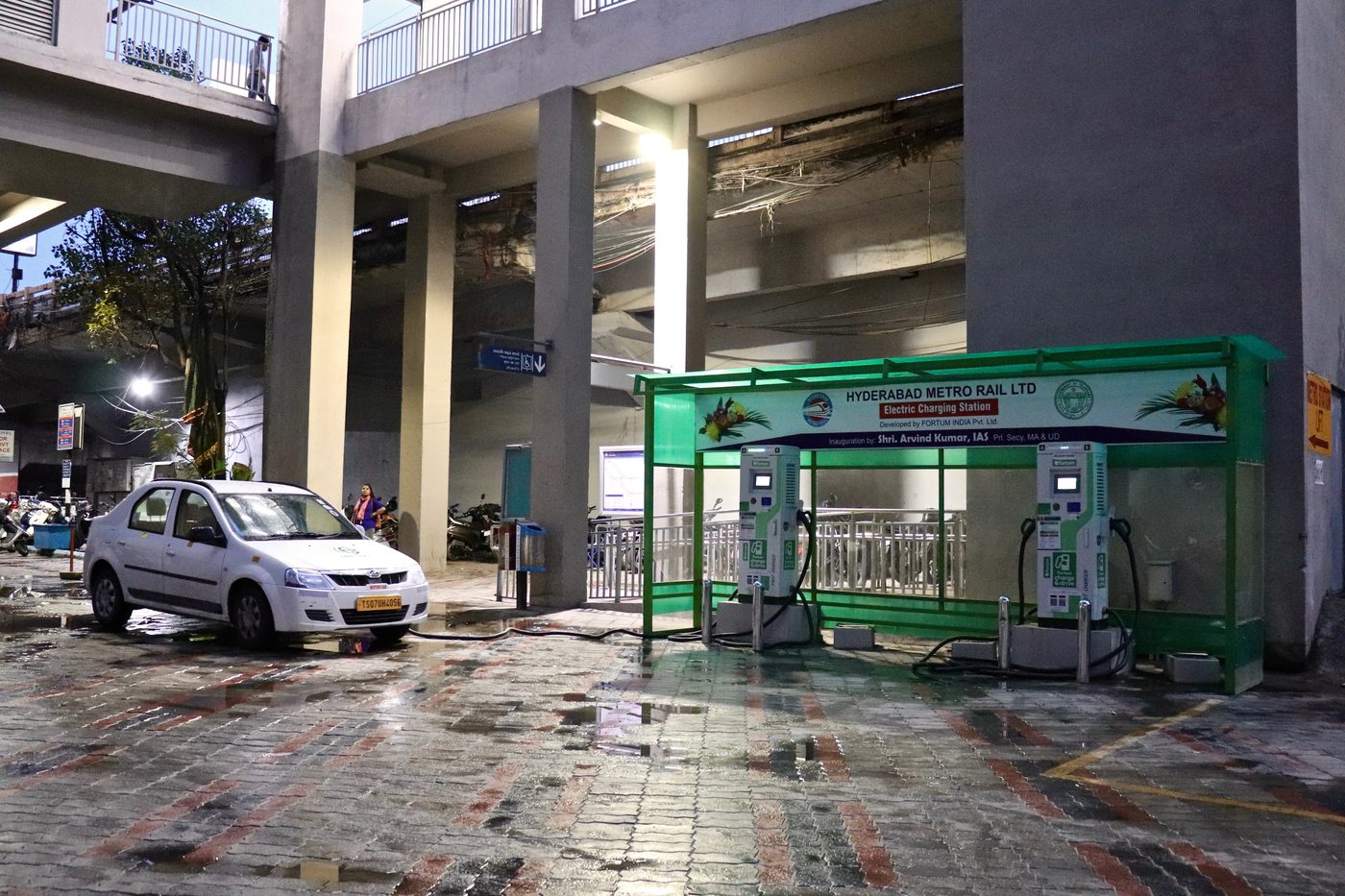
How to find a working charging station right now
Every charging network publishes its stations on an app with live status — that is the ground truth, and no website (including this one) can replace it in real time. What most people never learn is how to read those apps well. Four habits separate a 10-minute charge stop from a 90-minute ordeal:
Filter by live status, not distance. The nearest charger on the map is often offline, under repair, or ICE'd (blocked by a parked petrol car). Sort or filter by "available now" and pick the best working station within your range buffer — usually the second or third pin, not the first.
Check recent session history. Good apps show the last successful session per station. A DC charger with sessions this morning is alive; one whose last session is a week old deserves suspicion, especially on highway stretches.
Read the connector list before driving. Your vehicle needs CCS2 (cars and modern scooters) or Type 2 AC — some older stations list only Bharat AC-001/DC-001 connectors that modern vehicles cannot use. Two minutes in the app saves a wasted trip.
Keep a second app installed. Networks overlap imperfectly; a corridor dead on one app may have solid coverage on another. Our public charging habits article covers the app strategy and station etiquette in detail.
What public charging costs across India
Public charging prices cluster in a national band — roughly ₹17–25 per unit — with variation driven by the operator's model rather than the city: premium mall locations and highway DC stations price at the top, fleet-oriented and utility-run points at the bottom. Session fees and parking rules vary by site, so the honest comparison is per-session when the stop is short. Against home tariffs of ₹6–10, that 2–3x premium is the price of speed and convenience — the charging calculator and the running-cost tool's public-share field show exactly how much each charging habit costs per month.
The connector cheat-sheet
| Connector | Used by | Power class |
|---|---|---|
| Type 2 AC | All modern cars (AC), most scooters' wall charging | 3.3–22 kW |
| CCS2 (DC) | All modern electric cars, newer scooters with fast charge | 25–240 kW |
| Bharat AC-001 | Older public points, early fleets | up to 3.3 kW |
| Bharat DC-001 | Older public points, some fleets | up to 15 kW |
If you drive a car bought in the last few years, CCS2 + Type 2 covers you at virtually every modern station. Scooter riders with removable batteries mostly charge at home or at swap points; fast-charge-capable scooters use CCS2 where offered.